UC Genética e Biotecnologia Molecular 26-27 / Metabolic Engineering
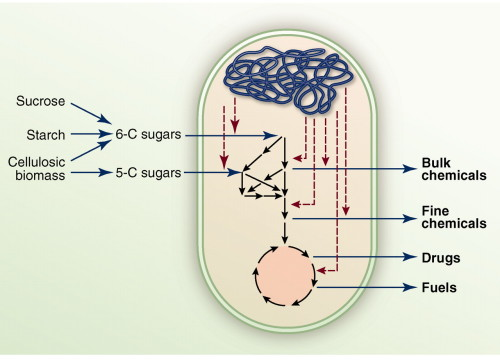
Figure from Keasling, J. D. 2010
This document contains notes and links for the Metabolic Engineering lecture and practical class for the course Genética e Biotecnologia Molecular, taught to students in Mestrado em Bioquímica Aplicada (MBQA) or Mestrado em Genética Molecular (MGM).
Lecture
You can see the lecture slides on Blackboard after the class. See the ethanol from wood problem solution. The metabolic maps used in the theoretical class.
TP exercise class

You need to bring a laptop computer to this class, and you also need the ApE plasmid editor app.
Your task is to assemble the sequence of the ATF1 expression vectorpTA1_TDH3_ScATF1_PGI1 in-silico using The Yeast Pathway Kit.
1. Assembly of the pYPKa_A_ScATF1 vector
Your first task is to assemble the pYPKa_A_ScATF1 vector. Follow these instructions. When you have your result, calculate the SEGUID checksum by using the fingerprint button in ApE. Compare your result with that of your instructor and your colleagues.
2. Assembly of the pTA1_TDH3_ScATF1_PGI1 vector
Your second task is to assemble the pTA1_TDH3_ScATF1_PGI1 vector. You need the pYPKa_A_ScATF1 plasmid sequence that you assembled in the previous task. Follow these instructions.
Metabolism
Practical class
We will perform an alkaline lysis plasmid mini prep from yeast followed by an E. coli transformation. This combination is called a “Plasmid rescue”. This is done because plasmid DNA yield and purity are higher in E. coli. Purifying the DNA helps us verify that the plasmid is correct using DNA sequencing and other methods.
We will also prepare a diagnostic colony PCR reaction to amplify a specific part of the plasmid. If we have time, we will separate the PCR product on an agarose gel together with a molecular marker as an initial indication that the plasmid sequence has been assembled correctly.
Plasmid rescue to E. coli
- Prepare crude yeast DNA from cells with glass beads and an E. coli plasmid miniprep kit
- Transform E. coli with crude yeast DNA
- Plate E. coli on Petri dishes with solid LB-amp medium from LAB7
Plasmid preparation from S. cerevisiae, one per group
- Scrape some yeast cells off a plate.
- Add 200 µL of P1.
- Resuspend by vortexing.
- Add 200 µL of glass beads (about one full 0.2 mL PCR tube).
- Vortex the tubes for 5 min using a disruptor genie.
- Add 200 µL of P2 as soon as possible, as cell disruption releases nucleases that can damage the DNA.
- Slowly invert the tube for ~4 min.
- Add 250 µL of buffer P3 and mix by slowly inverting the tube at least ten times.
- Centrifuge at top speed for 10 min.
- Transfer ~500 µL of the supernatant to 1 mL of 100% ethanol in a fresh tube and mix by inversion.
- Centrifuge at top speed for 10 min. Make sure the hinge of the tube is facing outwards.
- Pour away the supernatant. The plasmid DNA should be visible as a white spot.
- Add 1 mL of 70% EtOH. Mix by inverting the tube 2-3 times.
- Centrifuge for 1 min at top speed.
- Pour away the supernatant by opening and inverting the tube.
- Evaporate the ethanol by opening the tube lid and leaving the tube at 50 °C for 5 min.
- Resuspend the DNA pellet in 50 µL of 1x TE buffer.
- Label the tube with your number. Store the tube on ice for now.
E. coli transformation
- Add 10 µL of the plasmid DNA to the tube containing competent cells and flick the tube a few times to mix. Do NOT vortex the cells at this point.
- Incubate for up to 30 min on ice.
- Heat shock in a water bath at 42 °C for EXACTLY 45 s.
- Cool the tube for 1-2 min on ice or in a water/ice slurry for faster heat transfer.
- Add 1 mL of pre-warmed liquid LB medium to the tube and proceed to the next step, or let the cells recover at 37 °C for 1 h.
- Perform the diagnostic PCR described below during the 1 h incubation.
- Pipette 300 µL of the contents onto an LB plate with 10-20 sterile glass beads and swirl the plate to spread the liquid.
- Incubate the plates inverted for 18-24 h at 37 °C.
Diagnostic PCR
- Add 180 µL of TE buffer to a new 1.5 mL Eppendorf tube
- Add 20 µL of you S. cerevisiae plasmid DNA preparation
- Mix by vortexing briefly.
- Add 3 µL of the diluted DNA to a PCR tube (these are the small tubes).
- Your instructor will add 17 µL of PCR mix* to your tube.
- Put the tubes in the PCR machine.
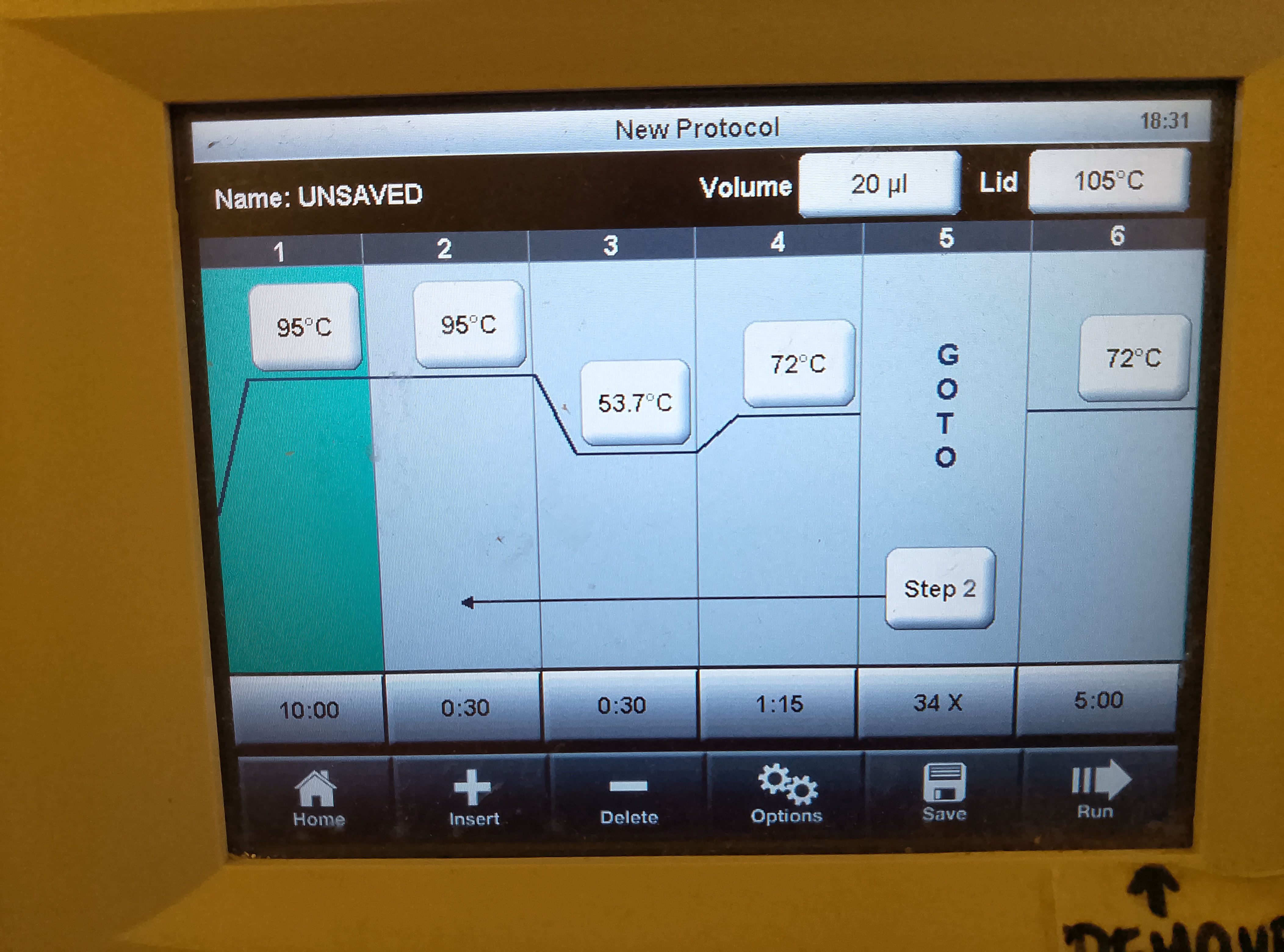
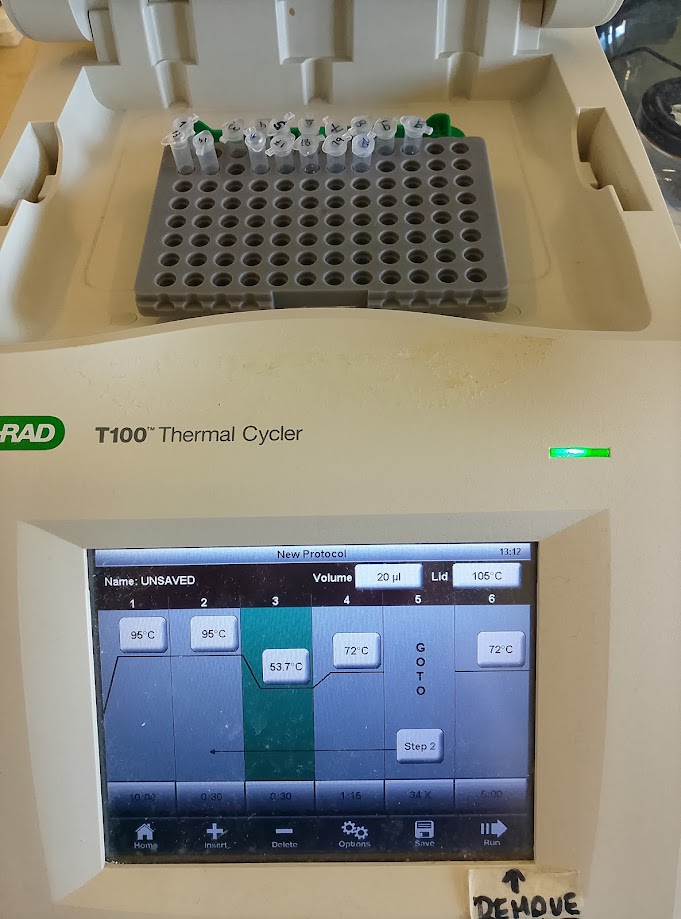
- Run the PCR program below:
Colony PCR
Summary:
- NaOH total yeast DNA preparation
- Colony PCR
NaOH Yeast DNA Preparation
Each student should have a plate with colonies. Do not contaminate this plate; we will need these yeast cells later.
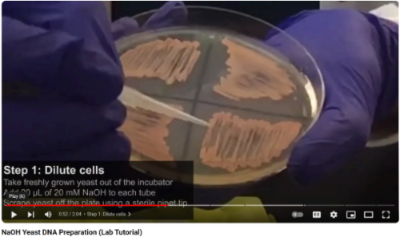
- Watch this YouTube video (2 min) describing the technique.
- Add 20 µL of 20 mM NaOH to a clean 1.5 mL Eppendorf tube.
- Pick a small number of cells from your plate with a yellow pipette tip for transfer to the NaOH solution. Do not take too many cells or any agar (see 52 s in the video).
- Add the cells to the solution and swirl to mix (see 59 s in the video).
- Incubate the tubes at 95 °C for ten minutes.
- When the 95 °C incubation is over, add 40 µL of TE buffer.
- Vortex the tube for 3-5 s.
- Spin at maximum speed in a microcentrifuge for 10-20 s.
- Add 17 µL of PCR mix (see below) to a new PCR tube (these are the small tubes).
- Add 3 µL of the yeast-NaOH mix to the PCR tube without disturbing the cell debris at the bottom of the tube.
- Put the tubes in the PCR machine.
- Run the PCR program below:
PCR program and primers
|95°C |95°C               |    |tmf:51.3
|_____|_____          72°C|72°C|tmr:51.4
|10min|30s  \ 53.7°C _____|____|45s/kb
|     |      \______/ 1:15|5min|GC 40%
|     |       30s         |    |1667bp

Primers:

>1748_s3 s3 tm=53.243
TAAAATCTCGTAAAGGAACT
>1742_s4r s4r tm=53.771
ACGGACTACGAGATAC
PCR mix
| Component | µL |
|---|---|
| 2x PCR mastermix | 250 |
| 6 x DNA loading buffer (PCR compatible) | 83 |
| Primer 1748 (10 µM) | 50 |
| Primer 1742 (10 µM) | 50 |
| Total | 500 |
Extra reading
How banana flavor is formed during whiskey fermentation (article).
Results (MBQA)
We seem to have colonies on about half of the plates from the E. coli transformation. I will take picture tomorrow.
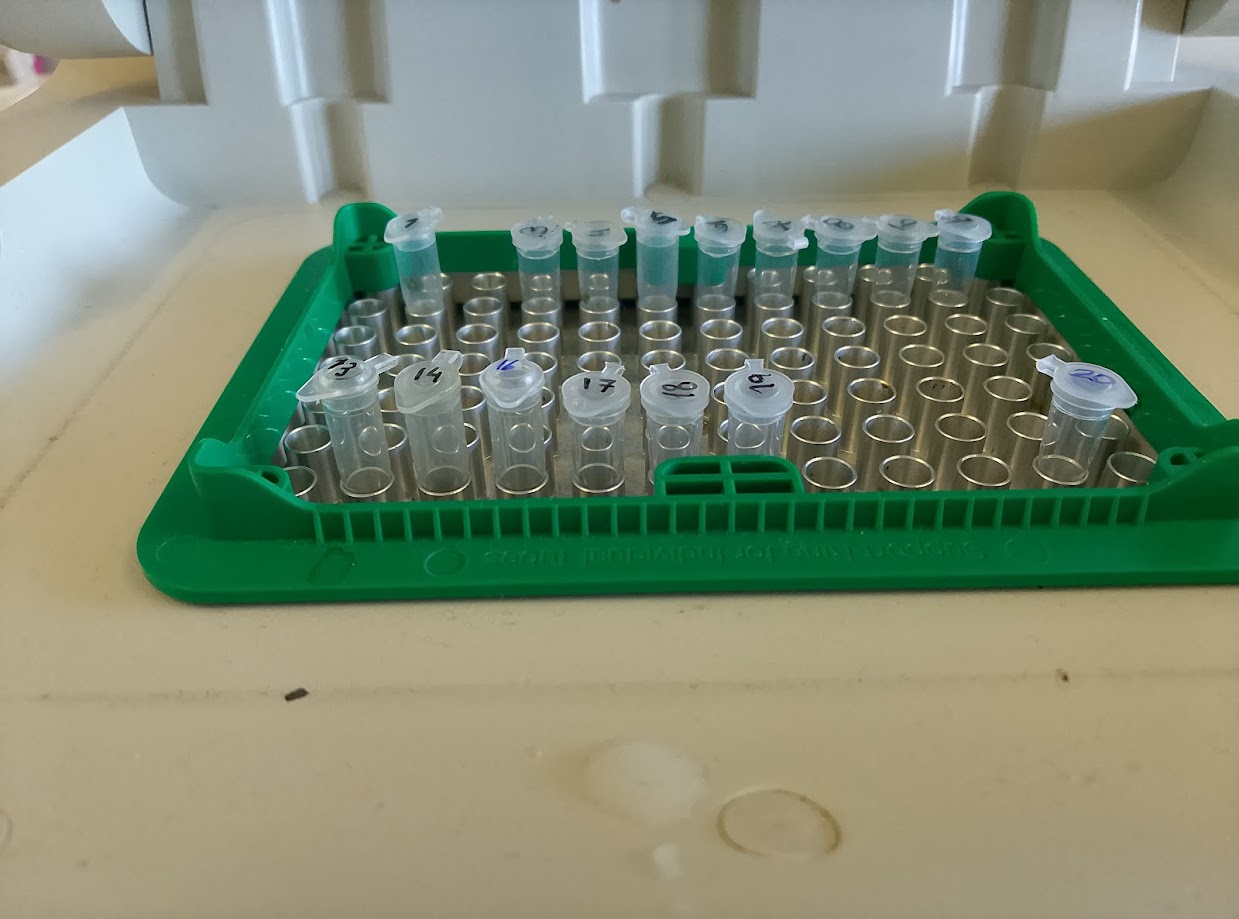
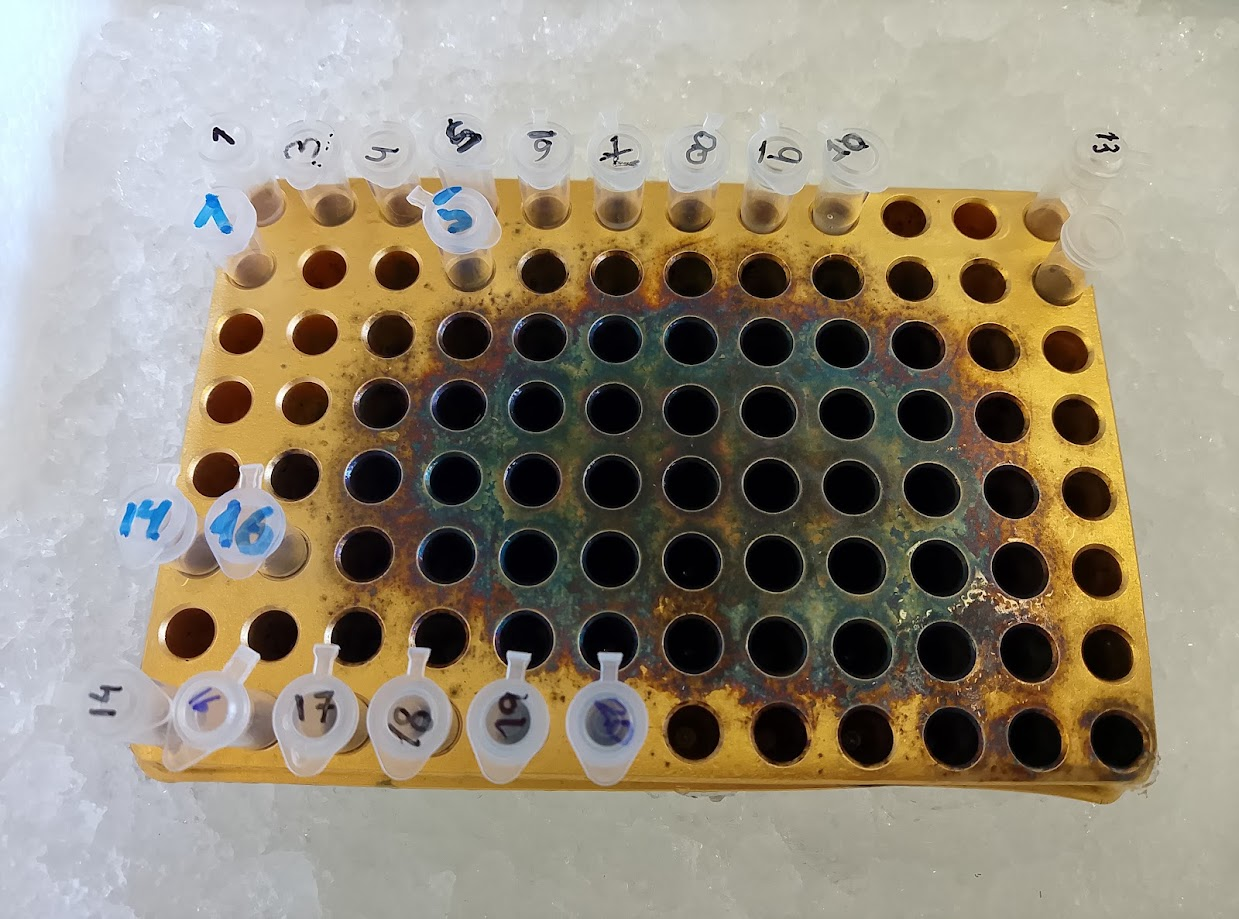
PCR Tubes collected during class:
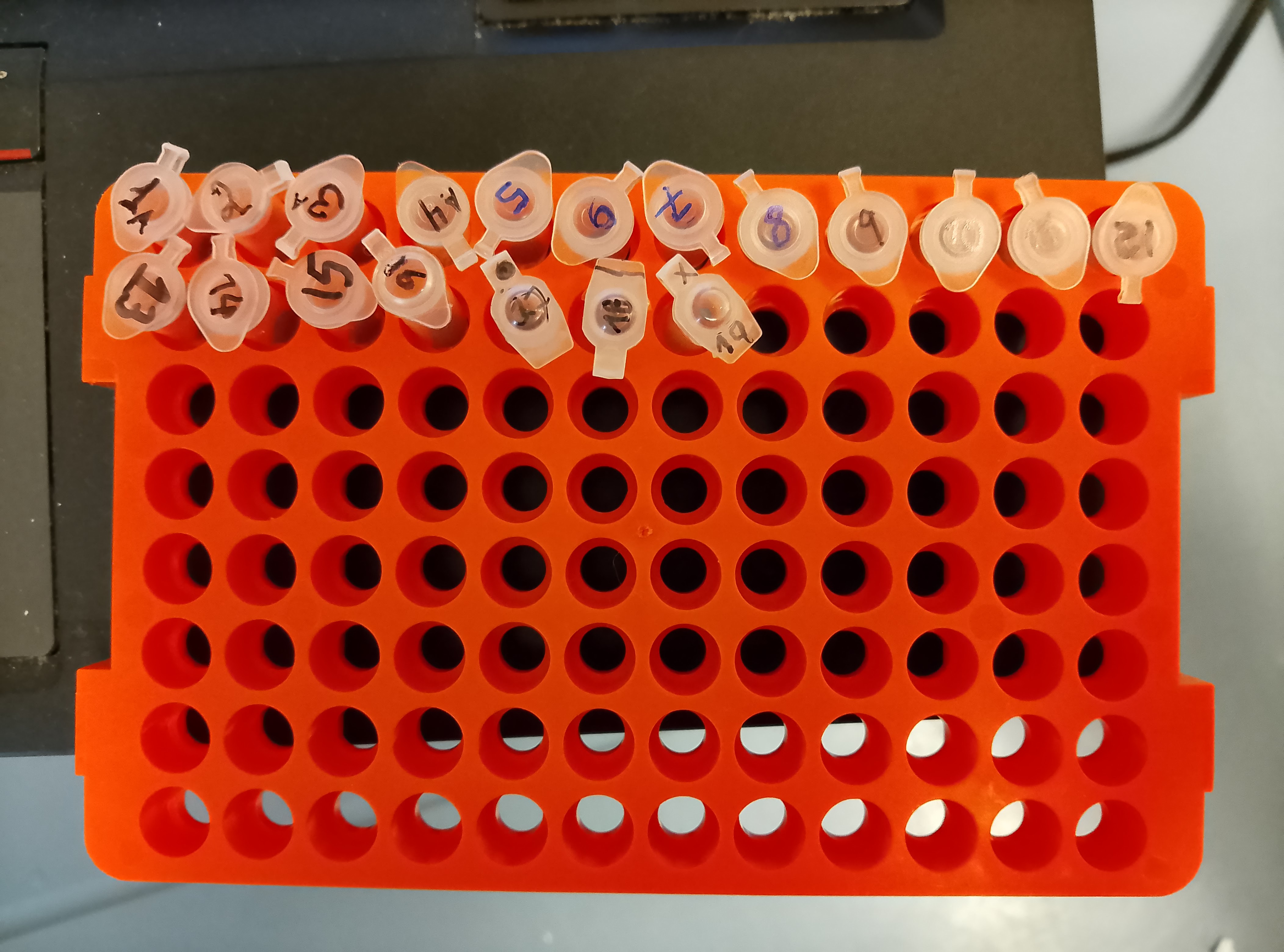
I had to transfer 2,4 16,17,18,19 to new tubes as the PCR mix can evaporate if tubes of different sizes are used at the same time.
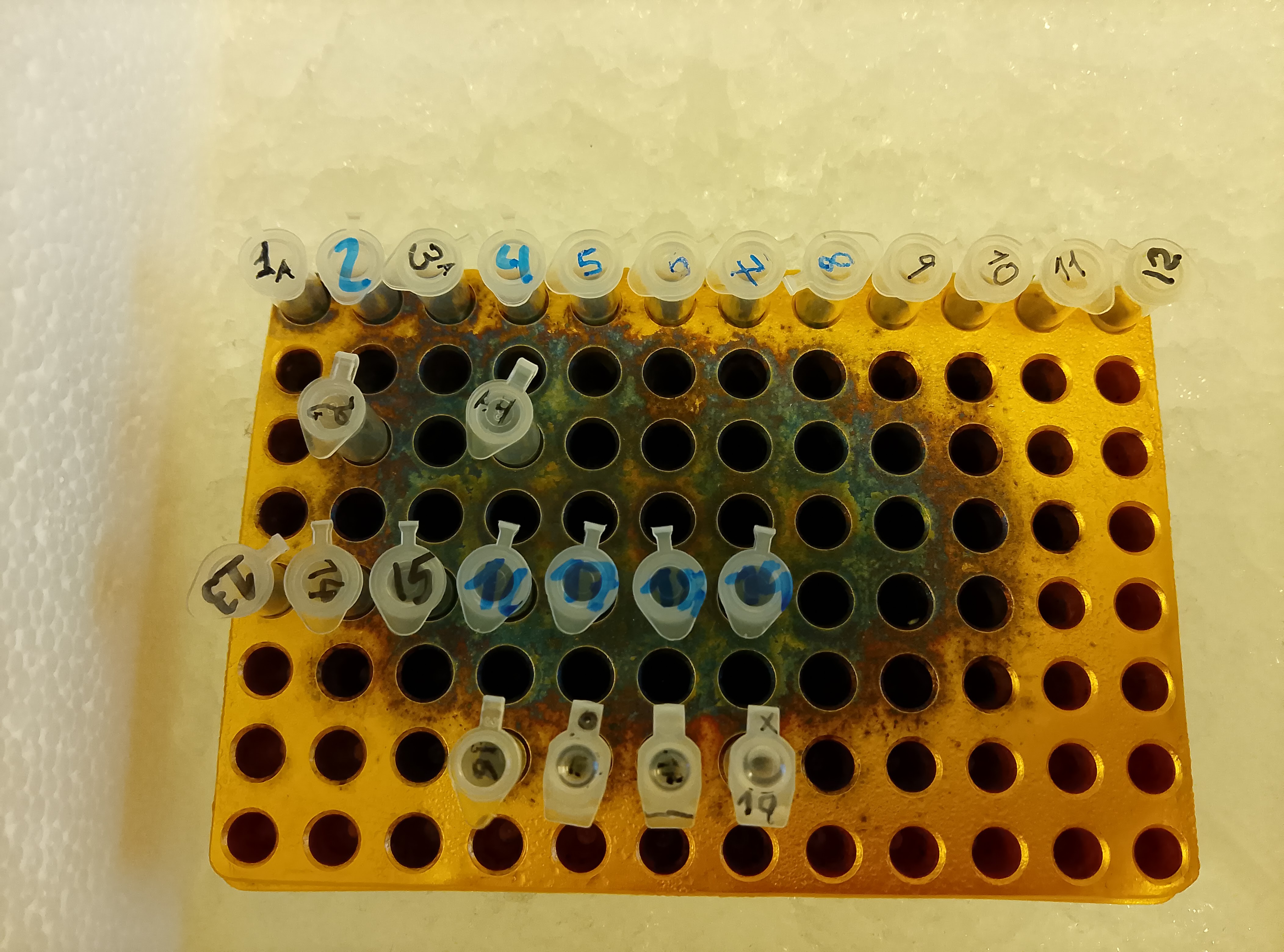
Program:
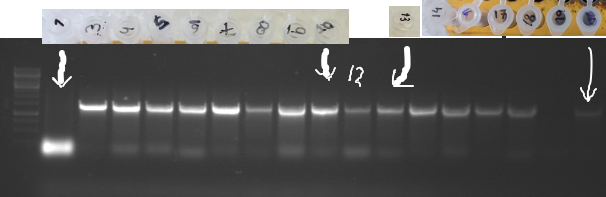
Result: Luana, MSc student in my group ran the gel for us (🙏) :
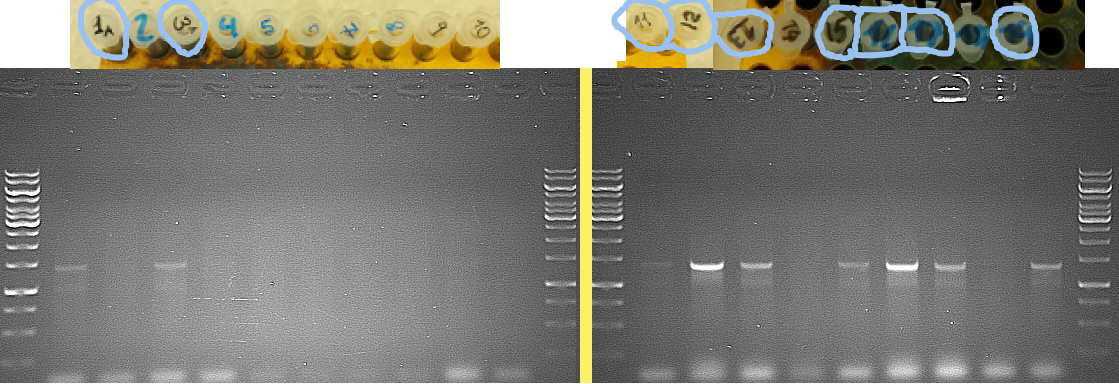
We have positive results for 1,3,11,12,13,15,16,17,19 (4, 9, 10 weak bends).
Results (MGM)
Discussion
What do the positive results mean? The two primers amplify the KanMX4 resistance gene in the pTA5 vector and would produce a longer fragment for the original pTA1 vector. The plasmid we aimed for is called pTA5_TDH3_ScATF1_PGI1. This plasmid was made by the students of GBM24 in October of 2024. They transformed a yeast strain carrying the pTA1_TDH3_ScATF1_PGI1 plasmid (this is the one we assembled during the TP class) with the KanMX4 geneticin resistance marker. They got transformants, but these were never confirmed until today (Oct 7 2026).
Why would we want the pTA5_TDH3_ScATF1_PGI1 plasmid? The geneticin marker can be used for selection in any yeast strain, the previous marker (LEU2) can only be used in a yeast mutant where this gene has been deleted or inactivated. This plasmid makes it possible to test other strain backgrounds such as wine or industrial strains.
Photo album
Study questions
- Why can a yeast with a fast initial production rate still perform poorly during repeated cell recycling?
- How do product titre, yield and productivity differ?
- How would you calculate the percentage of theoretical ethanol yield obtained from wood? Use the assumptions from the lecture.
- Why can the XR/XDH xylose pathway create a cofactor imbalance and accumulate xylitol?
- What problem does xylose isomerase avoid, and which downstream steps are still needed?
- Why does reduced xylitol production not necessarily mean improved ethanol production?
- How could limited pentose phosphate pathway capacity restrict xylose metabolism?
- Which controls would help compare the same engineered pathway in laboratory and industrial yeast strains?
- What does growth of an AccTet strain expressing heterologous ACC1 under tetracycline demonstrate?
- How many NADPH molecules are consumed per fatty acid elongation cycle?
- How can changes in lipid synthesis, storage or breakdown increase TAG accumulation?
- Why does a change in relative fatty acid composition not establish increased total fatty acid production?
- What reaction does Atf1 catalyse, and why might ATF1 overexpression fail to increase isoamyl acetate production?
- What roles do the TDH3 promoter, ATF1 coding sequence and PGI1 terminator play in the expression vector?
- Which fragments are needed to assemble the final expression vector, and why is checking plasmid length alone insufficient?
- Why is KanMX4 useful when transferring the vector into a LEU2-functional industrial yeast?
- Why rescue a yeast plasmid into E. coli, and which transformation controls help interpret an absence of colonies?
- How does the practical’s DNA dilution change the amount of original preparation added to PCR? Why can dilution improve amplification?
- What does an expected-size diagnostic PCR band establish? How would a band in the no-template control affect your interpretation?
- How would you verify plasmid structure and maintenance, then test whether the engineered yeast produces more isoamyl acetate? Include suitable controls.